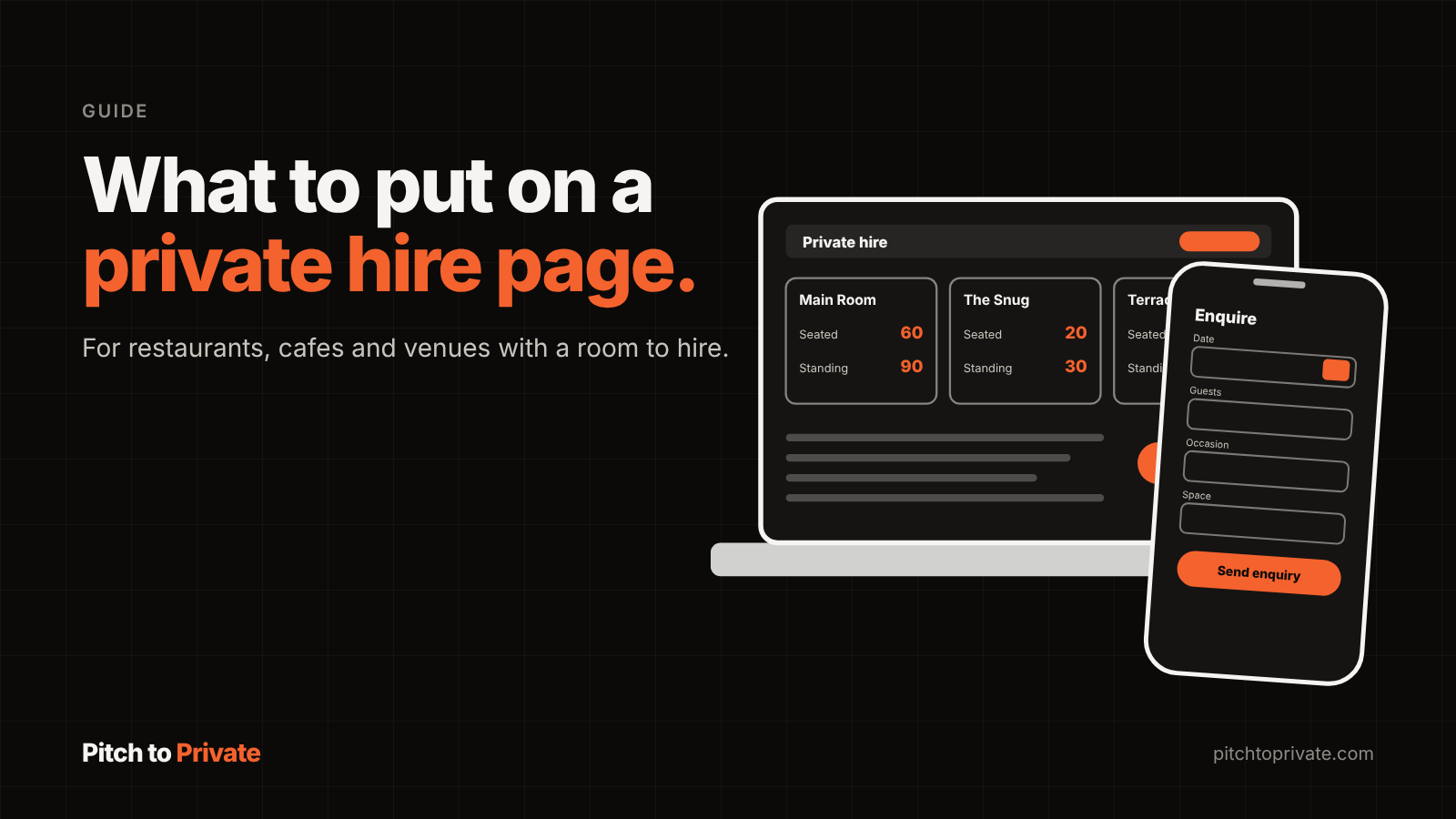
Private hire is booked by people planning something that matters to them. A milestone birthday, a christening, a team dinner, a baby shower, a leaving do, a wake. They want somewhere that feels right, holds the right number of people and fits the budget, and they usually start by searching for private hire or private dining near them.
A clear private hire page answers their first questions before they pick up the phone. It also means the enquiries you receive arrive with the details you need to reply properly.
There is a timing point worth knowing. Tagvenue's guide to private dining venues reports a median booking lead time of 51 days and a median group size of 50, based on its own booking data. On that median, someone enquiring in late October is planning for the second week of December, right in the middle of the Christmas party season.
The first thing an organiser checks is whether you can fit them. Tagvenue's guide advises organisers to search by seated dining capacity rather than maximum venue capacity, because a room that works for a standing reception can seat far fewer people at tables.
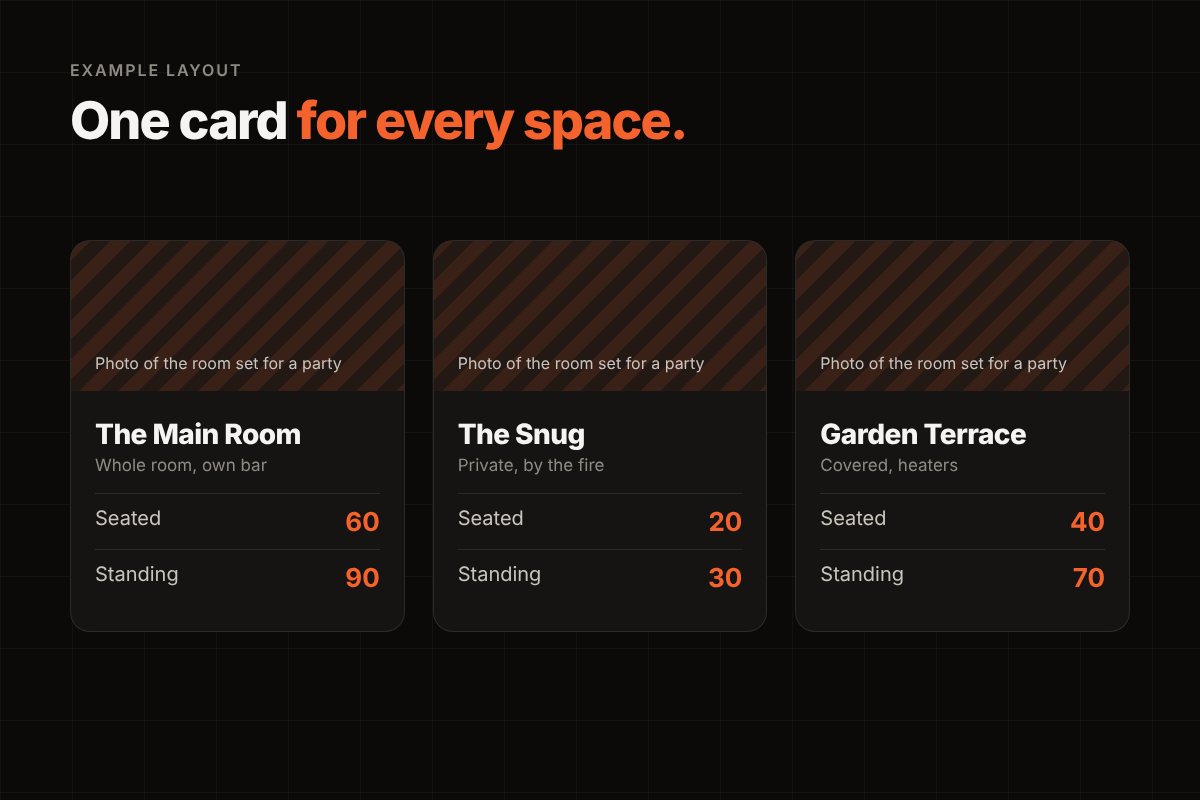
For each space you offer, give it a name and show the seated and standing numbers. If the whole venue can be hired exclusively, say so, and say from how many guests that becomes an option. A simple set of space cards, one per room or area, lets someone compare at a glance.
Restaurants price private hire in different ways. Tagvenue's guide sets out four common models, and warns organisers to check what a room hire fee actually buys them.
A set amount to spend on food and drink. Say whether it covers both.
A set menu at a fixed price per guest. Say what is included.
A charge for the space. Say whether food is charged on top.
The room, menu and drinks in one price. List what the package covers.
Whichever model you use, say what it is and what it includes. You do not need to publish every figure, but a guest who understands how it works can enquire with confidence instead of guessing.
Group menus are different from your everyday menu, and organisers want to see them. Set menus, sharing platters, a buffet, an afternoon tea or a drinks and canapés option all work well, as long as each one is laid out clearly.
Put the menus on the page as text, not only as a PDF download. Text reads well on a phone and can be read by search engines, which helps people find you. A PDF can still sit underneath for anyone who wants to print it. Label dietary options, and say how much notice you need for final choices and allergies.
Photos of an empty room do not help someone picture their event. Show the space laid for a party or dinner, with your own photos from real bookings where you can. If the room looks different in the evening, show that too.
Alongside the photos, cover the practical details people always ask about: step free access, parking or nearby car parks, whether music is allowed, whether they can bring a cake or decorations, and what time the event needs to finish.
Fixed-price websites for restaurants and cafes, from £200, with your spaces, group menus and an enquiry form.
If you have taken private hire bookings before, you already know the questions. Can we bring our own cake? Is there a deposit? Can we have the room after the kitchen closes? Can children come?
Put the answers on the page. It saves you time, and it shows organisers that you have done this many times before. Explain your deposit and cancellation terms in plain words, so nothing comes as a surprise later.
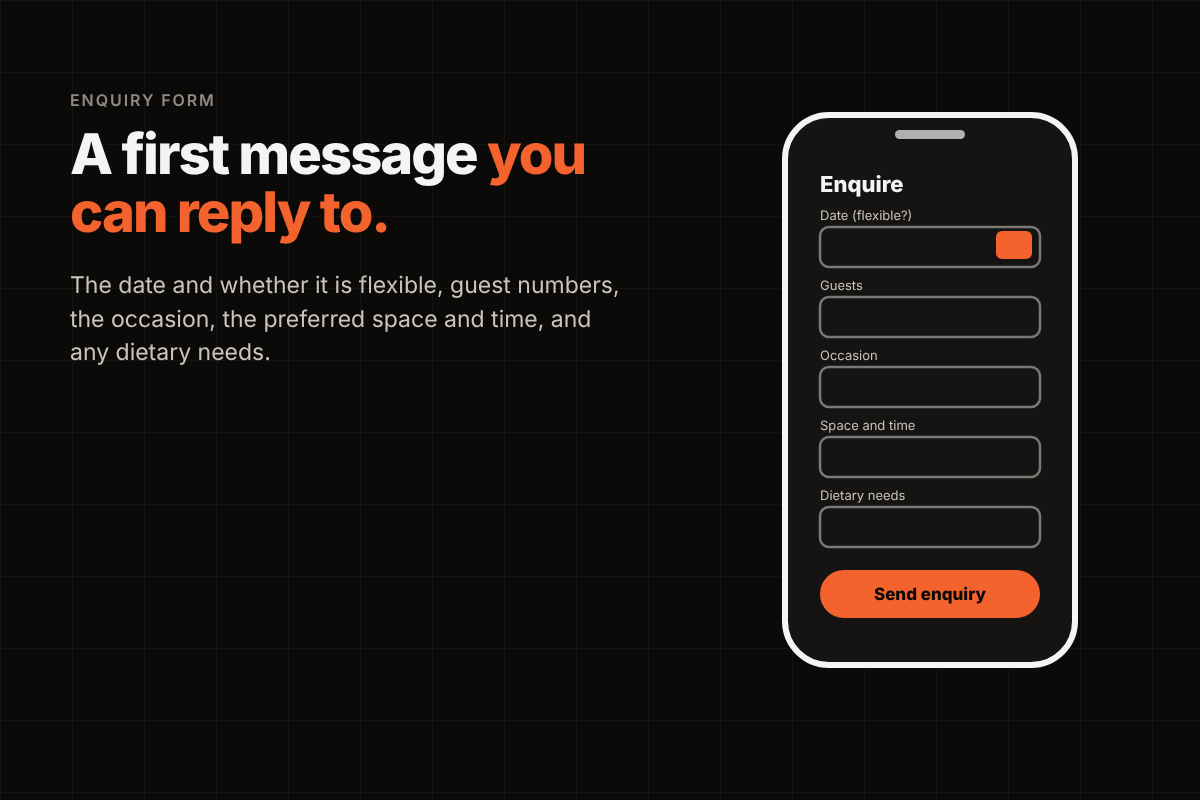
A private hire enquiry should arrive with enough detail for you to reply with something useful the first time. The details that matter most are the date and whether it is flexible, the number of guests, the occasion, the preferred space and time, and any dietary needs. A rough budget can help too.
A date picker or calendar style field makes the date part quick, especially on a phone. How you shape the rest of the form decides the quality of the enquiries you get, so it is worth thinking through for your own venue.
A private hire page works best when it reflects what you can offer right now. Add your Christmas party menu in the autumn, mention summer garden or terrace hire when the weather turns, and remove anything you no longer do.
Link to the page from your homepage, your main menu and your Instagram bio, so people can find it from wherever they first see you. If you are already fully booked on certain dates, saying so politely saves organisers time and keeps the enquiries you do receive realistic.
Private hire is not only for restaurants with a separate dining room. Many cafes take bookings for the evening after closing, for baby showers, birthday brunches, workshops, book clubs or supper clubs. A smaller capacity is fine. Say what you offer and the times it is available, so the right people can find you.
If you would like a private hire page added to your site, or a full site built around private events, you are welcome to send an enquiry and we can talk it through on a free 15-minute call.
Yes. A dedicated page with its own address can be found by people searching for private hire in your area, and you can share the link with anyone who asks.
It helps to explain how your pricing works, whether that is a minimum spend, a price per person, a hire fee or a package. A starting figure is useful, but the main thing is that organisers understand what is included.
The date and whether it is flexible, guest numbers, the occasion, the preferred space and time, and any dietary needs. An optional budget field can help you reply with the right options.